

history & building
hetpaleis is a performing arts centre for young audiences located in the iconic building of the Antwerp Stadsschouwburg (City Theatre) on Theaterplein. Our roots lie in the Koninklijk Jeugdtheater (KJT, Royal Youth Theatre), Antwerp’s former youth theatre. In 1997 director Barbara Wyckmans gave the KJT a new name: HETPALEIS (The Palace). With this name, she wanted to evoke an atmosphere of imagination and creation in a palace-like building with as many possibilities as there are rooms. Els De Bodt has led hetpaleis since 2016. She will soon be passing the torch to a new director.

Our history is as diverse as our activities. Read more about the highlights of our past below.
from KNS to KJT to HETPALEIS
The knowledge and expertise of creating professional theatre for young audiences is actually quite recent in Antwerp. It was only in 1942, when director Joris Diels decided to set up the Jeugdtheater (Youth Theatre) under the wings of the Koninklijke Nederlandse Schouwburg (KNS, Royal Dutch Theatre) that the first initiatives emerged. Diels convinced KNS actors to put their talents to use for a young audience as well.
Although its future remained uncertain for a long time, on 19 November 1945 (just after the liberation of Antwerp), the Mayor of Antwerp, Camille Huysmans, recognized and subsidized the Antwerps Jeugdtheater (Antwerp Youth Theatre), which officially became an independent municipal company. The theatre didn’t yet have a permanent home, but it was housed temporarily in the theatre where the ‘Theaterbuilding’ now stands, later in the Majestik on Carnotstraat and subsequently in the Bourlaschouwburg (Bourla Theatre), alongside the KNS. The Bourla Theatre proved not to meet the stricter fire-safety standards, necessitating a new structural solution. The Antwerp city authorities commissioned the construction of a new cultural centre to house the KNS, the Antwerp Youth Theatre, the Reizend Volkstheater (Travelling Popular Theatre) and the Studio Herman Teirlinck theatre school. The foundation stone was laid in 1968. It was then that Theaterplein (Theatre Square) was given its name.
The Antwerp Youth Theatre was renamed the KJT in 1970. In 1980 – a full twelve years after the foundation stone was laid – the Antwerp Stadsschouwburg opened.
KNS soon found the 800-seat auditorium too small and moved back to the Bourla Theatre in 1993. During that period, Music Hall established itself on the left-hand side of the Stadsschouwburg, increasing the capacity to around 2,000 seats. In 2014, the Sportpaleis group took over the concession; today, alongside the Koninklijke Balletschool (Royal Ballet School) and Jeugd en Dans (Youth and Dance), they remain the permanent neighbours of hetpaleis.

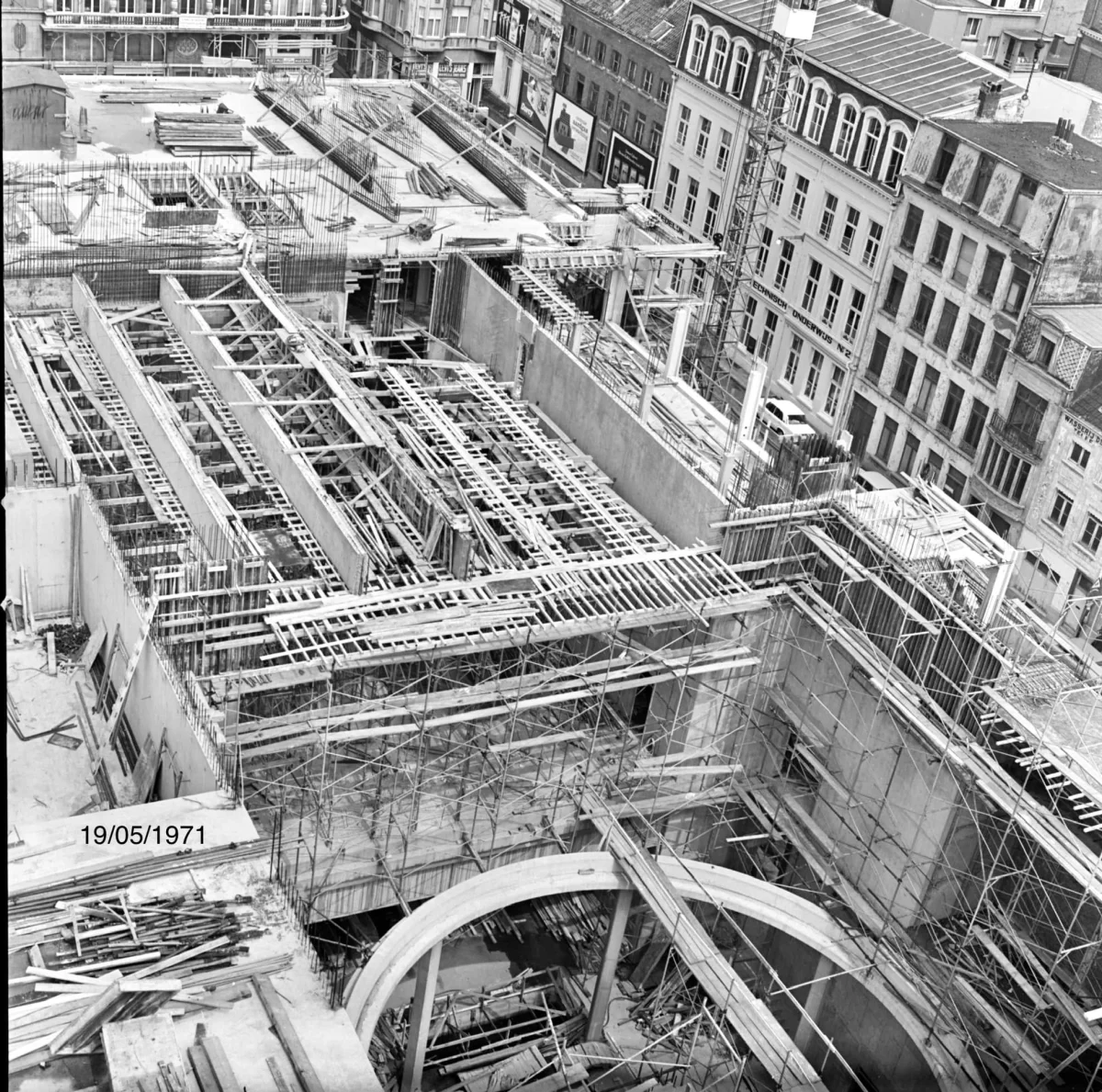

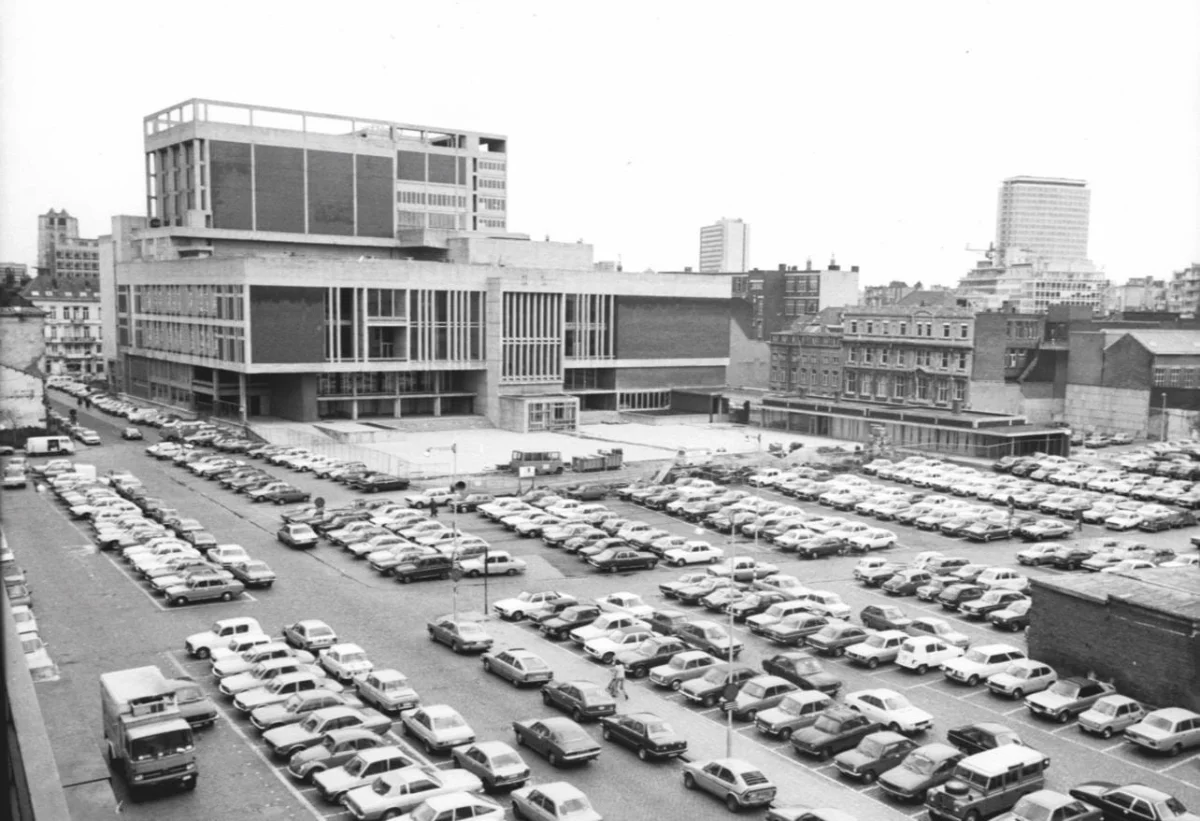
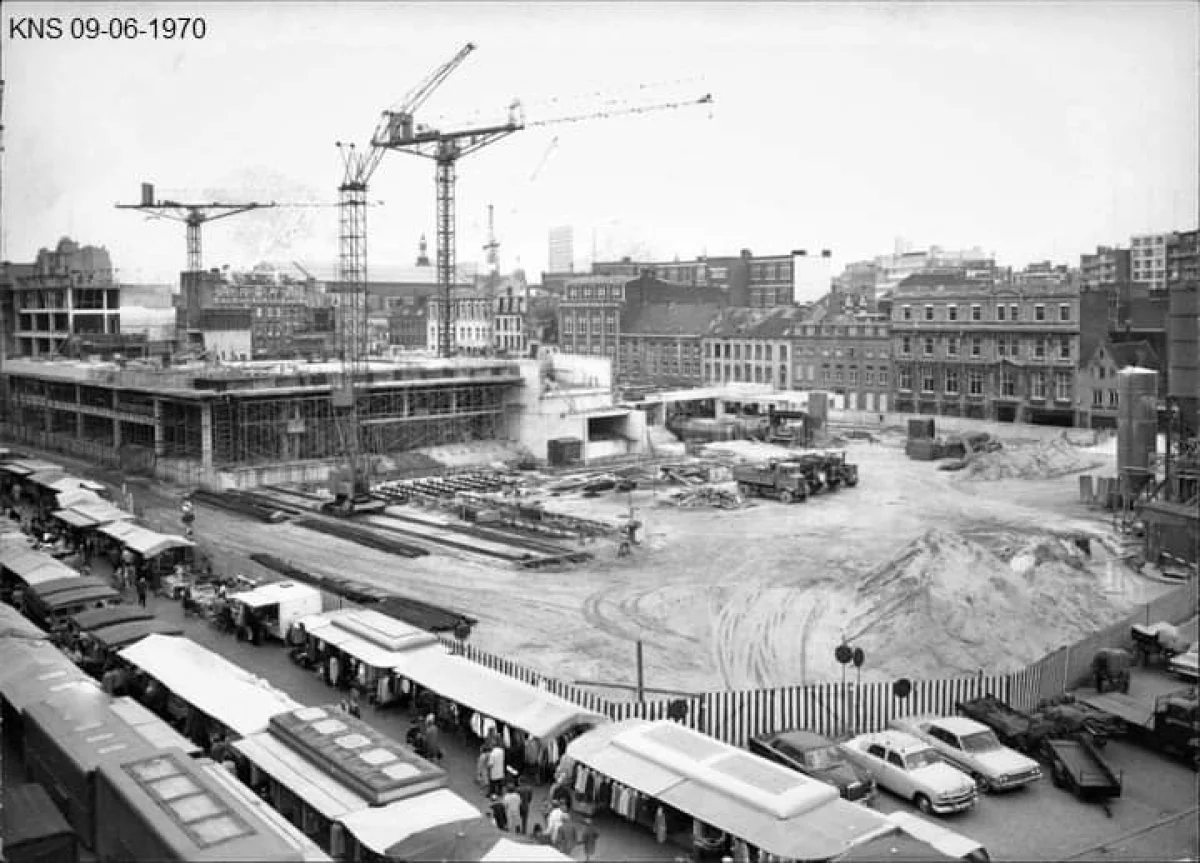
image: from the archives of hetpaleis, photos dating from 1970
In the late 1990s, the city authorities decided to no longer regard the KJT as a municipal institution. A Public Utility Foundation was established with an autonomous board of directors and Barbara Wyckmans as its first director. KJT became HETPALEIS.
HETPALEIS grew into a modern youth theatre and became a pioneer within the Flemish children’s arts scene. Peter De Graef, Piet Arfeuille and Stefan Perceval staged their first main-auditorium productions for young audiences there. Artists such as Pieter Embrechts, Dimitri Leue and Arne Sierens achieved a lot of work. Collaborations were launched with Laika, DAStheater, Ultima Thule and Walpurgis. One production that remains etched in the collective memory is Sunjata, the Lion King of Mali (premiered in 2006). In addition to its own productions, hetpaleis launched an educational programme: De Stal (The Stable, classes in theatre skills) and De Tuin (The Garden, workshops offering a taste of an artist’s creative process) thus became household names.

hetpaleis today
In 2016 Els De Bodt took over as general director of hetpaleis. Under her vision, hetpaleis grew into a venue where acclaimed productions tour not only in Flanders but also outside the Dutch-speaking region. The building became a public- and artist-friendly space, with hetgeluk serving as a central meeting place for children, young people, their (chosen) families and artists.
Many artists signed up for a first collaboration, the boundaries of theatre for young audiences were pushed, and diverse disciplines were explored. Artists who had already made their mark on the evening circuit took their first steps in creating for young audiences.
The artistic-educational programme also received a fresh impulse. Educational staff develop materials in close collaboration with the artists working in-house. And thanks to the transformation of De Stal into dekapers, even more children were introduced to the wonderful world of theatre.
the future of the Antwerp Stadsschouwburg
The infrastructure housing hetpaleis is in need of renovation. For a long time, it was unclear what would happen to the site on Theaterplein and whether hetpaleis could remain there. Anyone wandering through the corridors of hetpaleis hardly realizes how rich the building’s history is and how pivotal hetpaleis has been in shaping the Flemish arts landscape. A palace-like building with a large and a small auditorium, a wealth of technical and creative possibilities, different workshop and rehearsal spaces, a residency studio and a central meeting place exclusively for young audiences – and all of this in the heart of Antwerp – it is something the current city authorities also recognized and included in the Antwerp Administrative Agreement for 2025–2030.
In 2026 an architectural competition will be held for a thorough renovation of the Antwerp Stadsschouwburg, and the idea of a children’s arts centre, of which hetpaleis will form part, will be further developed at the site.
“A large-scale arts centre for children and young people would be a first in Europe. It is strange that in a city like Antwerp, where so many children live, there isn’t more physical space for them. The offer for adults is much greater. That’s not right, and it’s time to redress that imbalance.”